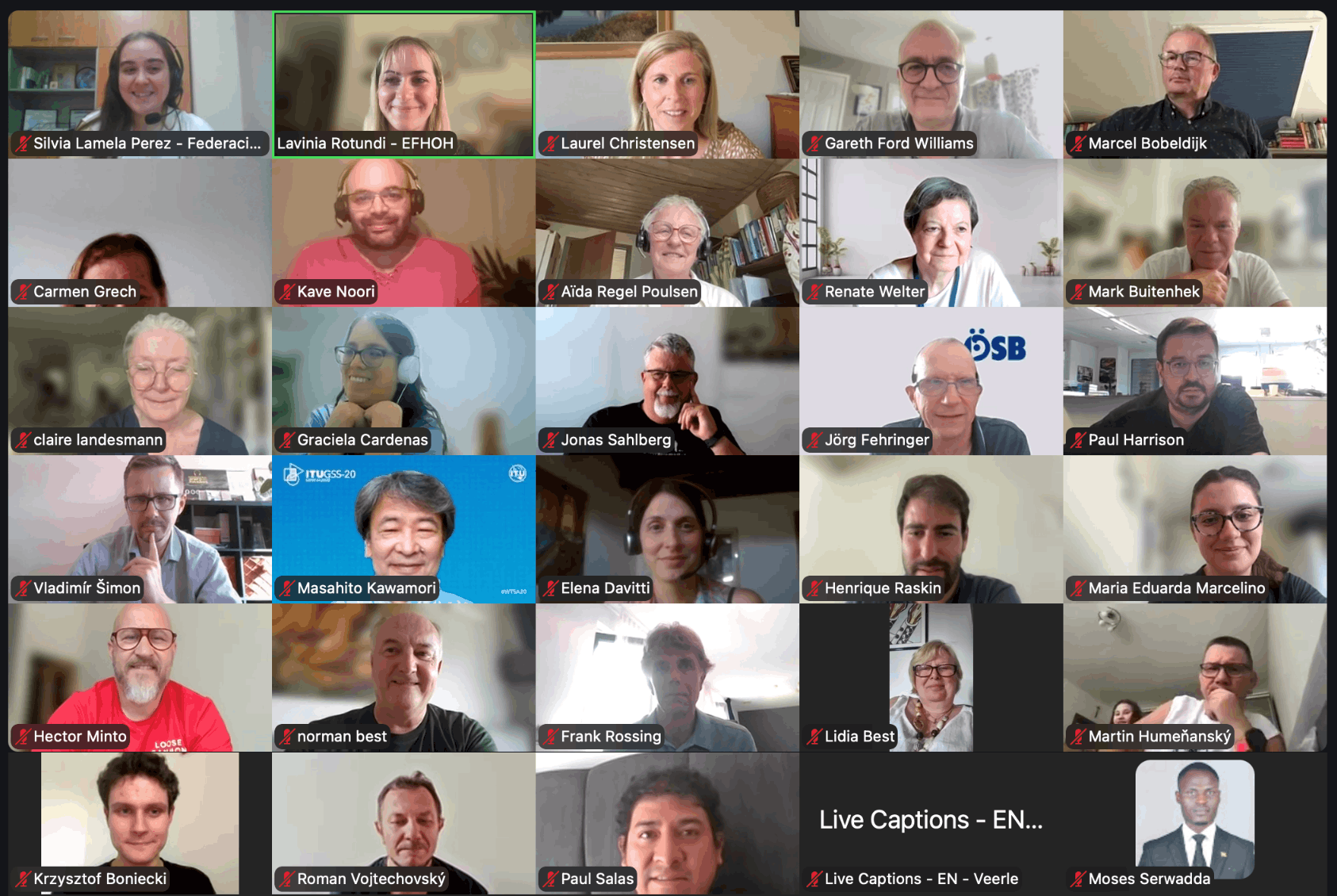
On 16 July 2026, EFHOH hosted the online webinar “AI for Hearing Access: Opportunities, Risks and the Future of Inclusion,” bringing together experts from the disability movement, hearing technology, research and international standardisation to explore how artificial intelligence is reshaping hearing accessibility.
The webinar attracted participants from across Europe and beyond, reflecting the growing interest in understanding both the opportunities and the challenges that AI presents for hard of hearing people.
The discussion highlighted the potential of AI-powered technologies—including automatic captioning, speech recognition, transcription and AI-enabled hearing technologies—to improve communication and participation.
Several key messages emerged throughout the discussion:
- AI should adapt to people’s needs, not require people to adapt to its limitations.
- Accessibility is an investment, and discussions should consider not only the cost of providing accessibility but also the social and economic cost of exclusion.
- Lived experience is expertise. Hard of hearing people must be actively involved in the design, testing, governance and standardisation of AI technologies.
- While AI offers significant opportunities for hearing access, important challenges remain regarding accuracy, trust and performance in real-life communication environments.
The discussion also reinforced the importance of ensuring that AI complements, rather than replaces, professional accessibility services and that future innovation is guided by the experiences and rights of hard of hearing people.
EFHOH would like to sincerely thank our distinguished panellists for sharing their expertise and perspectives: Kave Noori (European Disability Forum), Laurel Christensen (GN Hearing), Masahito Kawamori (International Telecommunication Union), Silvia Lamela Pérez (ACAPPS), and Gareth Ford Williams.
This webinar marks the beginning of a broader conversation. EFHOH remains committed to promoting inclusive, accessible and rights-based approaches to artificial intelligence and looks forward to continuing this work with our members and partners.
The recording is available here.